

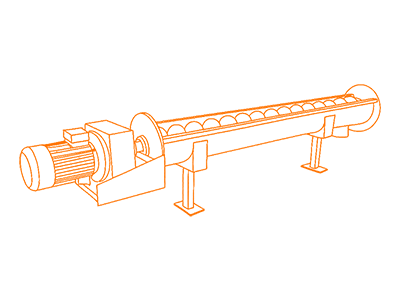
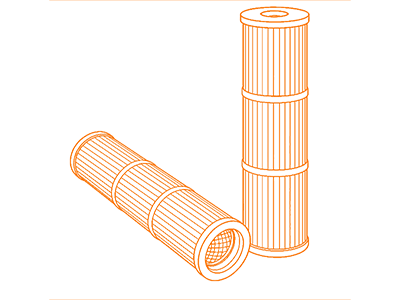

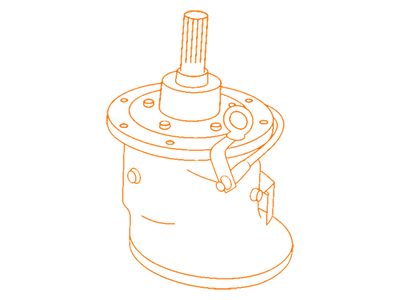
Jet pulse filter systems serve to trap dust and particles generated during production within a closed system in areas such as the ceramics industry, metal, foundry, cement, mining, wood, and defense industry.
English Translation
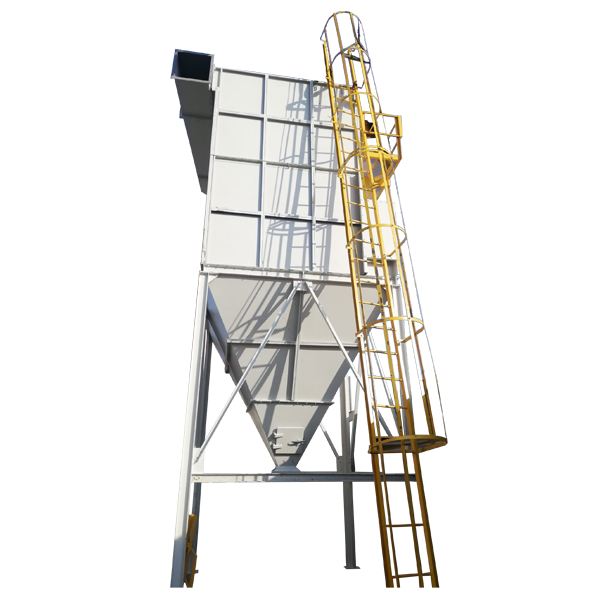
Jet pulse filter systems are filtration systems used to trap dust and particles generated during production within a closed system in areas such as the ceramics industry, metal, iron-steel, food, automotive, foundry, cement, mining, wood, and defense industry. The primary goal of these systems is to ensure that dust from facilities does not harm the environment by mixing with nature. Additionally, raw materials trapped within the system as waste and subsequently collected provide benefits to the business and the economy through recycling. The working principle of jet pulse filter systems is handled in detail.
Bag-type Dust Collection Systems collect dust generated during production or processes like filling, discharging, and transferring by vacuuming it through suction created by radial fans, separating it from clean air.
The dust collected from the environment enters the filter via ventilation ducts. The airflow is directed toward the fan, ensuring that air reaches the fan by passing through the outer surface of the filters. In this way, while the dusty air moves from the outer surface toward the inside of the filter, the dust is trapped on the filter surface. Only the purified air passes through the filter surface to be released into the atmosphere.
The dust on the bag surface is discharged into the hopper located under the filter body by pulse valves, timed by a timer, blowing compressed air in the opposite direction of the airflow. From the hopper, it is collected using systems such as buckets, Big-Bags, or conveyors.
Thus, clean air is released into the atmosphere while the dust is transported to the desired location. Filters are designed according to the characteristics of the facility, the nature of the dust, dust density, and exposure time.
These types of filters operate in a completely dry environment, performing filtration with filter elements (needle felt) obtained from various types of synthetic fibers (selected based on the physical and chemical properties of the dust to be filtered) using the needling method. The dust that accumulates on the outer surface of the filter bags over time during filtration is automatically cleaned using compressed air (Jet-Pulse Technique).